First posted 8 December 2021 on IMD Lausanne intranet.
Posted 12 November 2023 on possib.li.
Professional Athletes are the ultimate performers we can look up to for inspiration. They perform at their very best in the toughest competitions and share their emotions with us as they thread the fine line that separates the thrill of victory from the agony of defeat1. These moments however shine so brightly that they throw a shadow over the long years of training that were needed to reach these performance levels. I heard business people quip that they have to perform at their peak 40 hours a week while training for only one hour average2, whereas an athlete trains during the immense majority of her life and therefore has an easier life.
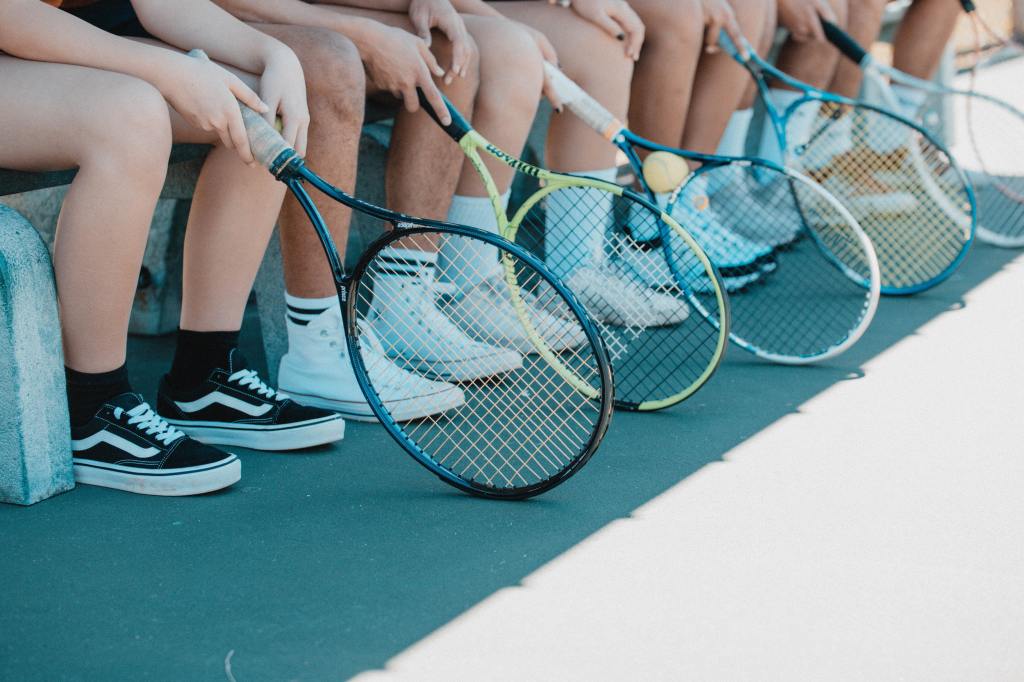
I’ll confront to that view the following very subjective Sport Dictionary of Stress for Athletes. You’ll judge if athletes perform at peak only during competition, or if their harder challenge is not the road that leads to it.
Finance: In a 2020 survey across 48 countries of nearly 500 elite athletes, many of them gearing up for the Olympics, an athletes’ rights group found that 58% said they did not consider themselves financially stable.3 On a different income planet, with a median income of $3.2 million dollars during their active years, 16% of NFL players will go bankrupt after 2 years of retirement, mainly due to lack of financial literacy4. Financial security is not easily reached for anyone, but for athletes the odds are definitely not good.
Food disorders: “Athletes not only experience sport-related pressures but are also subject to broader societal pressures around weight, body image, and eating faced by the general population.”5
Loneliness: Two-time Olympic track cycling champion Victoria Pendleton detailed in her book Between the Lines how the loneliness of a Swiss training camp led to self-harm with a Swiss Army knife.6 See the “Travel” entry on a related topic as well.
Pressure: It increases with success, as once in a generation athlete Simone Biles’ explained when she withdrew from the team competition at the 2021 Tokyo Olympics: “I think it was just the stress factor. It kind of built up over time, and my body and my mind just said no. But even I didn’t know I was going through it until it just happened.” Biles had been expected to be the face of the Tokyo Olympics, a favorite to win five gold medals after going unbeaten since 2013.7
Physical Injury and illness: The 1’783 young competitors at the Lausanne Youth Olympic Winter Games 2020 suffered 228 injuries, or 11.7 per 100 athletes over the 14-day period of the Games8. As a comparison, there are 87’000 accidents on Swiss skiing slopes for 2.5 million snow sport enthusiasts, or 3.5 per 100 over the entire 5-month season9.
Sexual abuse: While generally a safe environment, sports is an area where violence can manifest itself in various ways, including sexual assault. Studies quoted by the Quebec NIH show that between 2% and 8% of athletes (both minors and young adults) are victims of sexual assault within the context of sport.10 Despite these numbers and perhaps more than in other professional environments, an omertà reigns. In the words of Jennifer Sey, 1986 US national champion, “there was always concern that if you rocked the boat, you would be ostracized, you wouldn’t be chosen for the team, you would be blackballed in the sport. Which was true, as we have heard from athletes in the Nassar case.”11
Travel: Competitions take athletes across the country or the world, disrupting their sleeping cycles, confronting them to climate differences and separating them from their families. In the words of cricketeer Steve Harmison, “Six and a half hours a day I was in a place I would not swap for the world – inside the boundary ropes in countries like India, Australia and the West Indies,” he said. “For the other nine hours when I wasn’t asleep, I was thinking ‘I don’t want to be here’.12
Victory : Yes, even winning is stressful. U.S.A. swimmer « Michael Phelps took an emotional dive after winning a record eight gold medals in Beijing, in 2008. “I took some wrong turns and found myself in the darkest place you could ever imagine.” He said he barely trained for the 2012 London Games, but after a DUI (Driving under influence) in 2014, checked himself into rehab and was able to reignite his passion for competitive swimming »13 His case is not unique and a number of gold-winning athletes suffer from a so called post-Olympic depression.
And we have not mentioned pressure by the press, social media, the fear of unintended doping at meals or during illness, or racism in sports. Recollecting the daily challenges illustrated by our dictionary and documented by the words of athletes themselves, I’m even more impressed by the stamina, endurance and resilience every professional athlete has to demonstrate day after day to survive. It is true for those few who make it to the top, but perhaps even valid for all the others who do not get the chance to compete at the Olympics and yet are the multitude without whom elite sports would not exist. True inspiration for my daily life.
Sources
1- https://www.sportscasting.com/the-agony-of-defeat-vinko-bogataj-wiped-out-50-years-ago/
2- https://www.statista.com/statistics/795813/hours-of-training-per-employee-by-company-size-us/
4- https://gflec.org/initiatives/bankruptcy-rates-among-nfl-players-short-lived-income-spikes/
5- https://www.ncbi.nlm.nih.gov/pmc/articles/PMC8103200/
8- https://bjsm.bmj.com/content/55/17/968
9– https://www.bfu.ch/media/4cth3sym/unfallgeschehen-beim-ski-und-snowboardfahren-in-der-schweiz.pdf
10- https://www.inspq.qc.ca/en/sexual-assault/fact-sheets/sexual-abuse-young-people-sport
11- https://www.theguardian.com/sport/2018/jan/26/larry-nassar-abuse-gymnasts-scandal-culture
12- https://www.bbc.com/sport/30434343
13- https://www.theatlantic.com/health/archive/2016/08/post-olympic-depression/496244/
 Serious Matters Simply
Leave a comment